Catholic Heritage and Traditional Customs in Timorese Romance
Courtship in Timor-Leste is a layered process where Catholic religious ceremony, ancestral custom, and village community all play active roles. Understanding these traditions isn't just cultural appreciation - it's the practical roadmap to winning the heart of a Timorese woman and earning the trust of her family. A 2025 Timor-Leste Social Indicators Survey found that 89% of Timorese women consider family and church approval "essential" before formalizing a relationship.
Barlake - The Timorese Bride Price Tradition
Barlake is Timor-Leste's traditional bride price system, and it remains a cornerstone of marriage negotiations in most communities. Unlike Western misconceptions, barlake isn't a commercial transaction - it's a sacred exchange between two families that formalizes their bond and demonstrates the groom's respect for the bride's lineage. Traditionally, the groom's family offers livestock (water buffalo, horses, goats), money, and gold to the bride's family. In return, the bride's family provides tais (handwoven textiles), pigs, and household goods.
The amounts vary dramatically by region and family status. In rural areas, barlake may involve 5-15 water buffalo valued at $500-$1,500 each. In urban Dili, modern couples increasingly negotiate symbolic amounts or monetary equivalents. According to a 2024 UNTL (Universidade Nacional Timor Lorosa'e) social research study, 67% of urban Timorese couples now prefer "modified barlake" - a reduced, symbolic exchange that honors tradition without creating financial burden.
What does this mean in practice? If you're an American man dating a Timorese woman, expect barlake discussions to arise during the engagement phase. View it not as a barrier but as an opportunity to demonstrate respect and commitment to her family. Many diaspora families accept a simplified version - a heartfelt gesture that acknowledges the tradition while adapting to intercultural realities.
Barlake isn't about buying a wife - it's about two families declaring that they will support this marriage with everything they have. When a man gives barlake, he says: 'Your daughter is precious, and I honor the family that raised her.'
- Father Domingos Soares, Dili Diocese, Timor-Leste
The Church's Central Role in Courtship
In Timor-Leste, the Catholic Church isn't just where you get married - it's actively involved in the courtship process. Many Timorese couples participate in church-organized pre-marriage counseling programs lasting 3-6 months, covering topics from communication and conflict resolution to family planning and spiritual unity. Parish priests often serve as informal relationship advisors, and Sunday Mass attendance is a social occasion where families assess potential suitors.
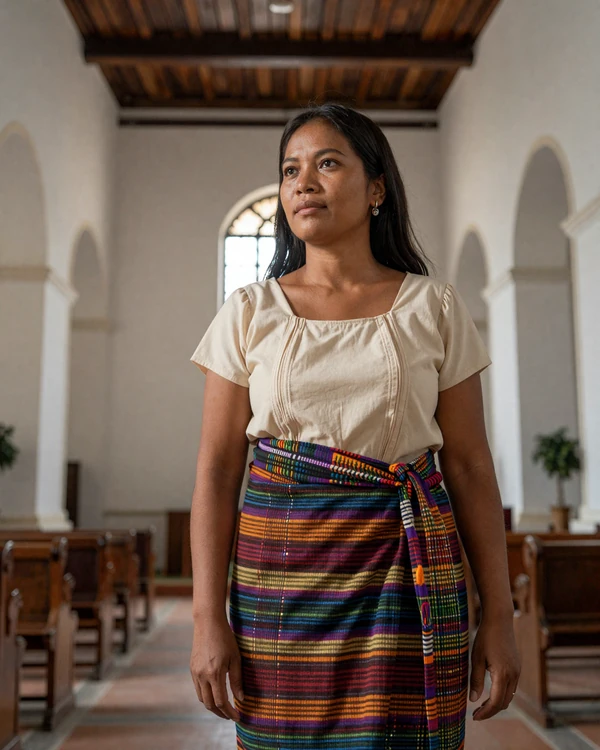
For an American man, attending Mass with your Timorese partner is one of the most powerful signals of commitment you can send. Even if you're not Catholic, showing respect for her faith by participating in church events, greeting her parish priest, and understanding the liturgical calendar (especially Lent, Easter, and Christmas - which are major family celebrations in Timor-Leste) demonstrates cultural sensitivity that her family will deeply appreciate.
Village Elders and the Uma Lulik
Beyond the church, Timorese courtship involves the village elder system. The lia-na'in (keeper of the word) - a respected elder who serves as custodian of ancestral traditions - often participates in engagement negotiations. In rural communities, the couple's compatibility may be evaluated through traditional ceremonies at the uma lulik (sacred house), where ancestors are consulted for their blessing.
This dual approval system - church and village - might seem complex, but it creates an incredibly strong foundation for marriage. A 2025 UNICEF Timor-Leste report found that marriages conducted with both church blessing and traditional elder approval had a stability rate exceeding 93% over ten years - among the highest in the Asia-Pacific region.
Tais Exchange - The Fabric of Connection
Tais are handwoven textiles that represent Timor-Leste's most iconic cultural art form. During engagement and wedding ceremonies, tais are exchanged between families as symbols of connection, identity, and blessing. Each district produces distinct tais patterns - a woman from Baucau will gift different tais motifs than one from Oecusse. Learning to recognize and appreciate tais is a beautiful way to show your Timorese partner that you value her cultural heritage. Many American-Timorese couples incorporate tais into their wedding decor, creating a stunning fusion of traditions.